Conducting a SWOT analysis is a critical strategic planning tool for small businesses, allowing them to assess their strengths, weaknesses, opportunities, and threats in a structured manner. This guide demystifies the process, providing practical examples and insights specifically catered to the unique challenges faced by small businesses. Entrepreneurs often grapple with decision-making due to a lack of clarity in their operational and market environments. By leveraging SWOT analysis, they can uncover actionable insights that enhance strategic planning and execution. This article will cover the definition and importance of SWOT analysis, a step-by-step guide to conducting your own analysis, practical examples of SWOT components across different industries, and common pitfalls to avoid.
What is SWOT Analysis and Why is it Essential for Small Businesses?
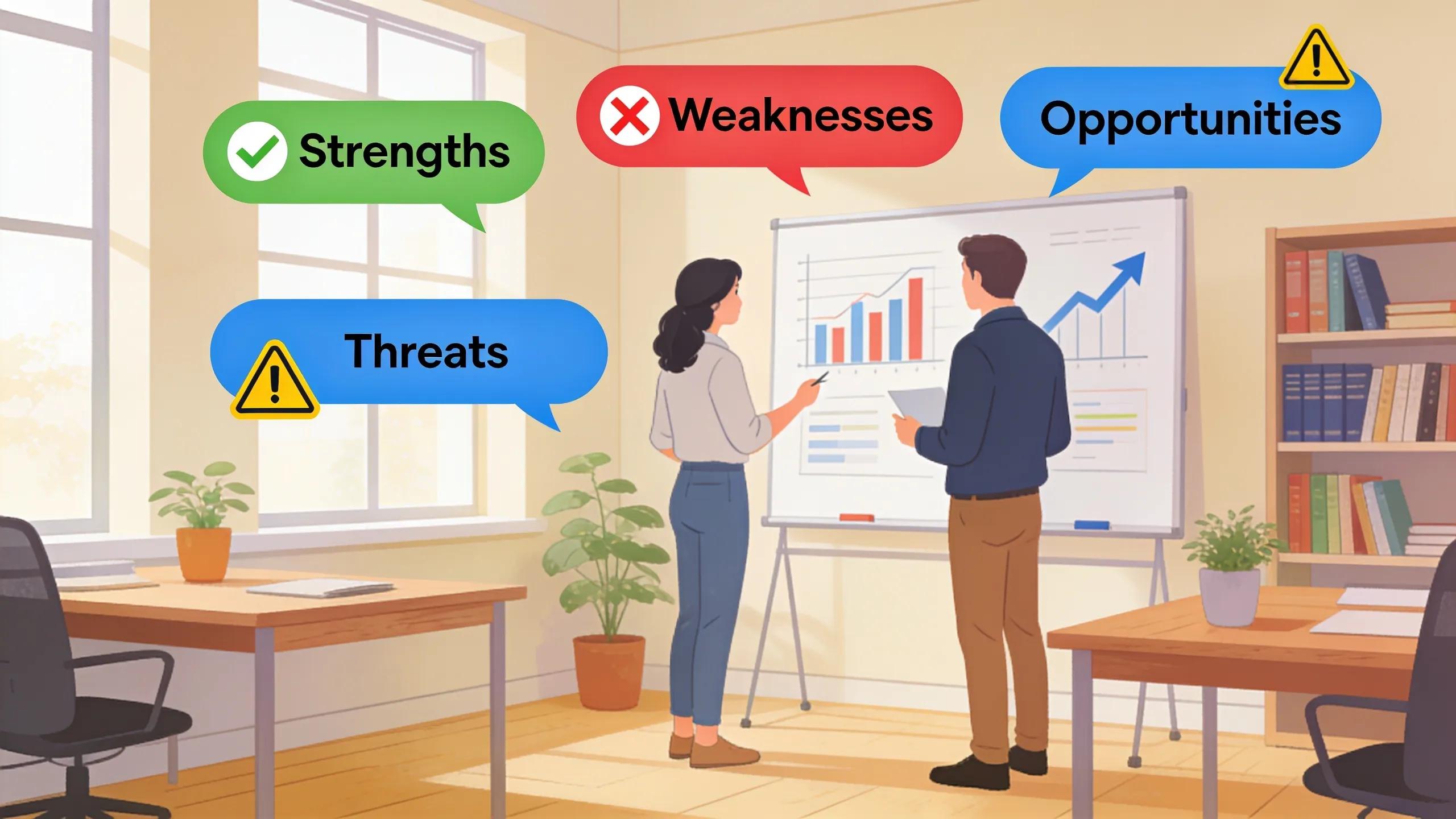
SWOT analysis is a strategic planning tool that enables businesses to identify and evaluate their Strengths, Weaknesses, Opportunities, and Threats. This framework provides a comprehensive view of internal and external factors that influence business operations. By understanding their strengths, small businesses can leverage them to gain competitive advantages. Conversely, acknowledging weaknesses helps in mitigating risks and avoiding potential pitfalls. The identification of opportunities allows businesses to explore avenues for growth, while recognizing threats prepares them for potential challenges. In a rapidly evolving market, the value of SWOT analysis lies in its ability to inform strategic direction.
How Do Strengths and Weaknesses Affect Small Business Performance?
Strengths and weaknesses play a pivotal role in determining a small business’s performance. Strengths may include unique offerings, strong customer relationships, or operational efficiency. Recognizing these can help a business capitalize on its advantages. For example, a small retailer with strong customer loyalty can leverage this strength through targeted marketing campaigns to boost sales. On the other hand, weaknesses such as limited financial resources or inadequate technology might hinder growth. Understanding these internal factors allows business owners to create strategic plans that capitalize on strengths while addressing and improving weaknesses, ultimately enhancing overall performance.
What Opportunities and Threats Should Small Businesses Monitor in 2026?
In 2026, small businesses should be keenly aware of both emerging opportunities and potential threats in their environments. Opportunities might stem from technological advancements such as e-commerce growth, which allows for wider market reach. Additionally, trends toward sustainability can present businesses with unique selling propositions if they adopt eco-friendly practices. Conversely, threats may include economic downturns, increased competition, and changes in consumer behavior. Small businesses must stay vigilant in analyzing these external factors to adapt their strategies accordingly, ensuring they are well-prepared to navigate the challenges ahead.
How to Conduct a Step-by-Step SWOT Analysis for Your Small Business
Conducting a SWOT analysis involves several key steps that guide business owners through the process of evaluating their positions. This systematic approach allows businesses to use actionable insights derived from their analysis.
What Are the Key Steps in the SWOT Analysis Process?
To successfully complete a SWOT analysis, follow these key steps:
- Identify Strengths: Compile a list of internal strengths that can provide a competitive edge. This may involve assessing resources, skills, or advantages.
- Evaluate Weaknesses: Identify areas for improvement or limitations that may impede success, such as staffing or financial constraints.
- Analyze Opportunities: Research external opportunities that can drive growth, such as market trends or new technologies.
- Recognize Threats: Assess external challenges that could adversely affect the business, including competitive threats or regulatory changes.
Each of these steps contributes to a holistic view of the business landscape, empowering owners to make informed decisions.
Worked SWOT Analysis Examples for 5 Common Small Business Types
Below are fully worked SWOT analysis examples tailored to five common small business types. These examples illustrate how SWOT can be customized to specific business contexts and challenges.
Local Independent Retail Shop
- Strengths: Strong relationships with local customers; unique product selection not found in big-box stores; flexible and responsive inventory management.
- Weaknesses: Limited marketing budget; small physical footprint restricting inventory variety; reliance on foot traffic which varies seasonally.
- Opportunities: Ability to expand online sales through e-commerce platforms; community events to increase brand awareness; partnerships with local artisans for exclusive goods.
- Threats: Competition from large online retailers; rising rent costs; changing consumer shopping habits favoring convenience.
Neighborhood Restaurant
- Strengths: Established loyal customer base; locally sourced ingredients enhancing food quality; personalized customer service.
- Weaknesses: Limited seating capacity; dependency on in-person dining revenues; high staff turnover impacting service consistency.
- Opportunities: Growth in delivery and takeout services; catering contracts with local businesses; menu diversification to appeal to health-conscious consumers.
- Threats: Increased competition from new eateries; fluctuations in food supply costs; health and safety regulations affecting operations.
Small Marketing Agency
- Strengths: Specialized expertise in digital marketing; agile and adaptable team; strong creative portfolio.
- Weaknesses: Limited brand recognition compared to larger agencies; reliance on a small number of major clients; constrained resources for large-scale campaigns.
- Opportunities: Expansion into emerging social media platforms; growing demand for content marketing; collaboration with complementary agencies for joint projects.
- Threats: Rapid changes in marketing technology; client budget cuts; increasing competition from freelancers.
Direct-to-Consumer E-commerce Store
- Strengths: Direct customer relationships allowing immediate feedback; lower overhead without physical storefront; data-driven marketing strategies.
- Weaknesses: High digital advertising costs; dependency on reliable shipping logistics; limited brand awareness beyond niche markets.
- Opportunities: Expansion into international markets; influencer partnerships to boost visibility; adoption of emerging payment technologies.
- Threats: Platform policy changes affecting sales channels; cybersecurity risks; intense competition in crowded product categories.
Local Service Business (e.g., Salon or Landscaping Company)
- Strengths: Personalized service building strong client trust; flexibility to adapt services based on customer needs; local reputation and word-of-mouth referrals.
- Weaknesses: Limited scalability without hiring additional staff; dependency on local economy; vulnerability to seasonal demand fluctuations.
- Opportunities: Offering bundled service packages; expanding into nearby neighborhoods; introducing eco-friendly or specialty services.
- Threats: Increasing costs of materials or supplies; competition from larger service providers; regulatory changes affecting labor or environmental practices.
SWOT Analysis Template for Your Small Business
Use the grid below to fill in your own SWOT analysis:
Strengths (internal, positive)– What do we do better than competitors?- ______________________________________
Weaknesses (internal, negative)– What do we lack or do worse than competitors?- ______________________________________
Opportunities (external, positive)– What market, trend, or gap could we take advantage of?- ______________________________________
Threats (external, negative)– What outside factor could hurt the business?- ______________________________________
How to Use a SWOT Analysis Template for Small Business Planning?
Utilizing a SWOT analysis template can streamline the process and make it more effective. A template provides a structured format where the various elements of the analysis can be clearly laid out. Begin by filling in each quadrant of the template with the identified strengths, weaknesses, opportunities, and threats. This visual representation allows for easier comparison and prioritization of factors. Business owners can repeatedly reference the template as they strategize or pivot their business plans, ensuring alignment with their overall goals.
Industry-Specific SWOT Analysis Examples
Understanding practical examples of SWOT components in various industries illustrates how this analysis can be customized to specific contexts. Small businesses operate in diverse environments, and recognizing their unique factors is essential for accurate analysis.
Which Strengths and Weaknesses Are Common in Retail and Service Businesses?

In the retail industry, common strengths might include a prime location, strong brand recognition, or exceptional customer service. These factors can drive foot traffic and encourage repeat business. Weaknesses may encompass high inventory costs or inadequate digital presence, which can limit sales growth. Service businesses often capitalize on skilled personnel and personalized service as strengths but might struggle with inconsistent service quality or limited marketing reach as weaknesses. By analyzing these factors, businesses can devise strategies that play to their strengths while mitigating weaknesses.
How Do Technology and Market Trends Create Opportunities and Threats?

Technological advancements and changing market trends significantly shape the landscape for small businesses. For instance, rise of online shopping presents a substantial opportunity for small retailers to expand their reach beyond local markets. Conversely, rapid technological changes also pose threats, as businesses must continuously adapt or risk obsolescence. Recently emerging market trends, such as increased consumer demand for sustainable products, can provide distinct opportunities for businesses that align with these values, while failing to adapt to these trends can lead to competitive disadvantages. Awareness of these dynamics is crucial for proactive strategic planning.
How to Avoid Common Mistakes When Doing SWOT Analysis for Small Businesses
While conducting a SWOT analysis can be beneficial, there are common pitfalls that small businesses should avoid to ensure accurate and actionable results.
What Are Frequent Errors in Identifying SWOT Elements?
One frequent error is overlooking significant strengths or weaknesses due to biases or lack of comprehensive data collection. For example, businesses may fail to recognize a strong customer loyalty base simply because they don’t actively solicit feedback. Moreover, misidentifying threats, such as dismissing emerging competitors, can lead to strategic missteps. Conducting thorough market research and involving diverse stakeholders can help mitigate these risks, enabling a more accurate analysis.
Monitoring social media comments and online reviews can provide small business owners with real-time, candid feedback from customers. This direct insight often uncovers strengths such as exceptional service or product quality that might be underappreciated internally. It also highlights weaknesses that customers experience but the business may not fully recognize, like slow response times or product issues. Regularly engaging with these social channels allows businesses to surface and address issues promptly, strengthening their overall position.
How Can You Improve Strategic Decisions Using Annotated SWOT Matrices?
Annotated SWOT matrices serve as a powerful tool for refining decision-making. By incorporating notes and insights alongside identified strengths, weaknesses, opportunities, and threats, business owners can depict relationships between different elements. For instance, an annotated matrix may suggest that a particular strength, such as innovative product design, can effectively address a specific market opportunity. This layered approach to analysis allows for more nuanced strategic discussions and better-informed decisions about business direction.